AGM and GEL Batteries: Features and Advantages of Each Technology


 5 min read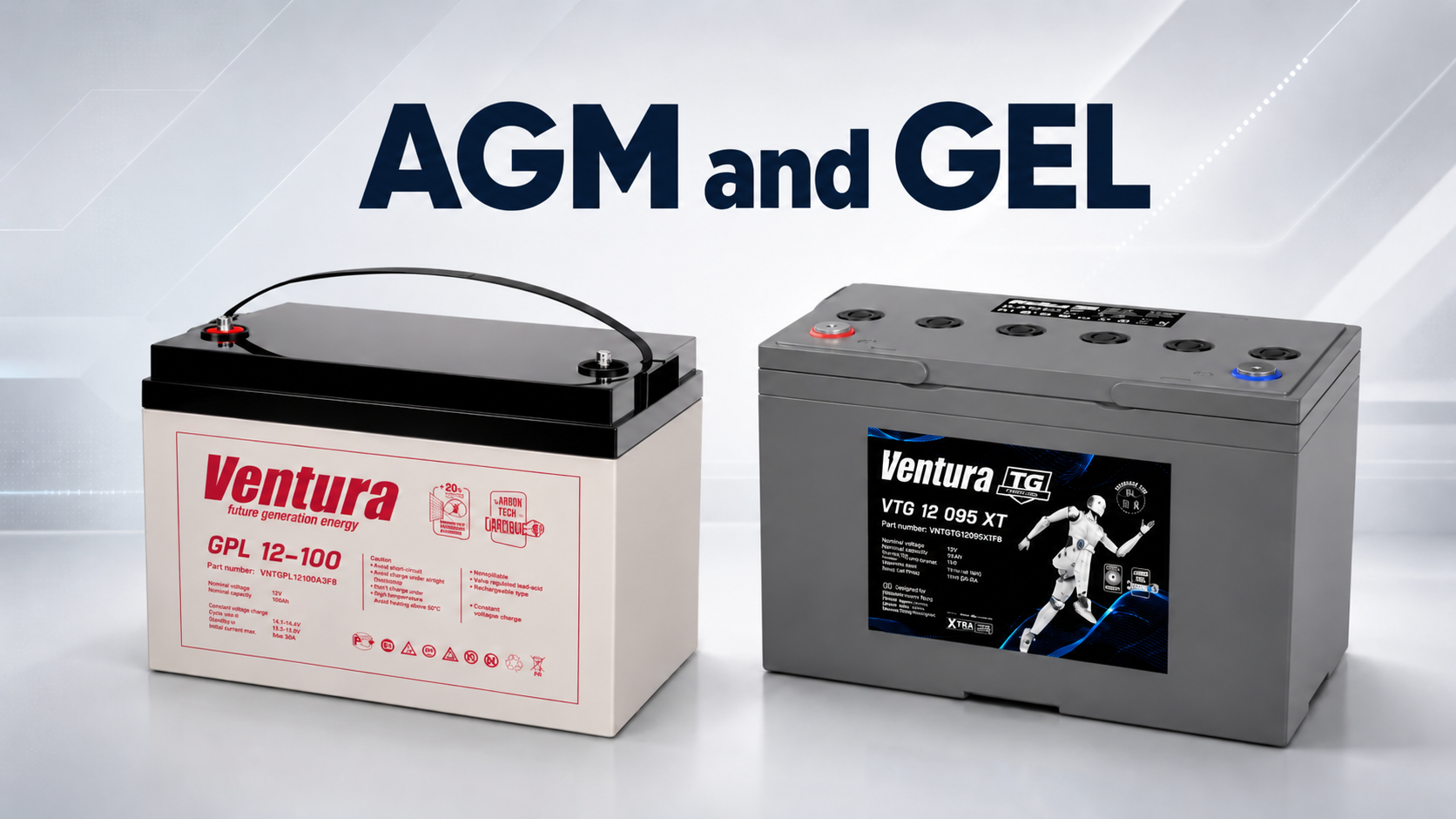
When designing backup power systems, off-grid power facilities and cycling plants, engineers and purchasers inevitably face a choice between two technologies – AGM and GEL. The batteries that use these technologies belong to the class of sealed, maintenance-free VRLA lead-acid batteries with internal gas recombination, comply with the requirements of IEC 60896, IEC 61427 and are used in the B2B sector: from UPS in data centers and server rooms to traction equipment in warehouse complexes and energy storage devices in renewable energy.
First of all, we note that AGM and GEL batteries are traditional lead-acid batteries. Their work is based on the same chemical reactions as “classic” batteries, and the electrolyte is the same acid. But in maintenance-free batteries, the acid is in a bound state:
Although the electrochemical basis is similar, AGM and gel batteries differ significantly in design, characteristics and optimal application scenarios. Understanding these differences helps you select a battery for the operating mode of a particular facility, reduce the risk of premature wear and more accurately calculate operating costs.
- In AGM batteries, the interelectrode space is filled with a microporous fiberglass separator material (hence the name Absorbent Glass Mat). The porous fiberglass acts like a sponge - it holds the acid and prevents it from spreading, even if the battery case is damaged.
- In GEL batteries, the electrolyte contains silicon dioxide (SiO2), which turns the acid into a gel-like mass (hence GEL - gel electrolyte).
GEL batteries
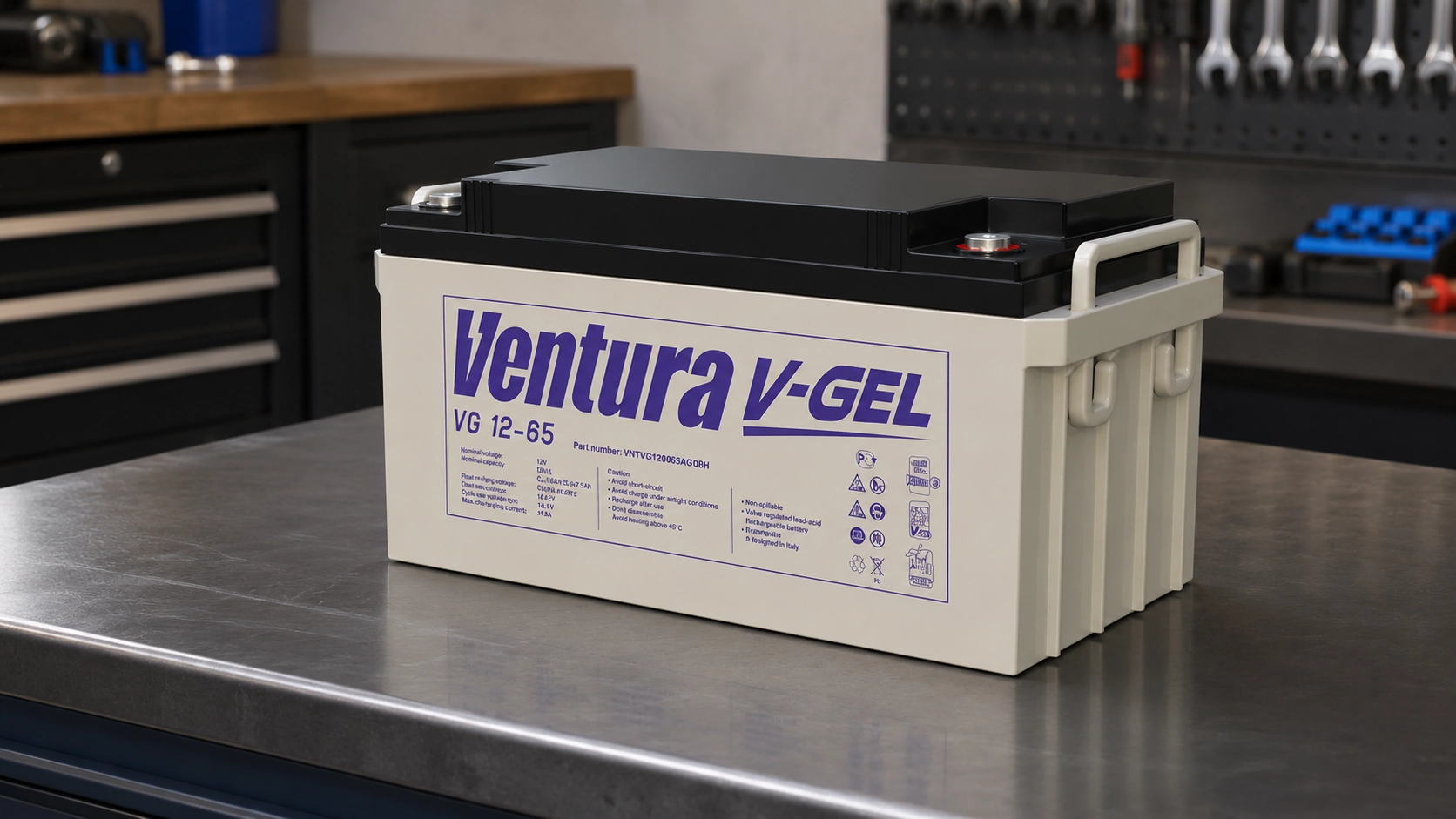
Gel batteries get their name from the state of the electrolyte: sulfuric acid mixes with highly dispersed silicon dioxide (SiO₂) and thickens to a jelly-like consistency. This electrolyte is securely fixed inside the case and does not move when the battery is tilted too much, which allows the use of GEL batteries in non-standard mounting arrangements, if such an installation position is allowed by the manufacturer of a particular battery. This is especially in demand in mobile installations, systems with limited installation space and in facilities with increased operational safety requirements.
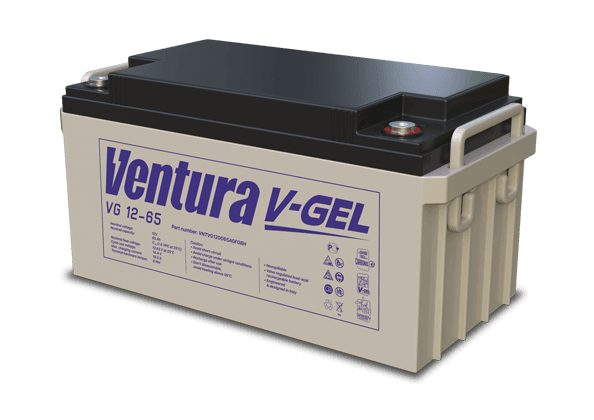
The main advantage of GEL technology is its high resistance to deep cyclic discharges. Gel batteries Ventura series GEL, V-Gel and Ventura PRO are designed for regular cyclic discharges, including up to 80% DoD for individual models and operating modes. The cycle life ranges from 400 to 1500 or more cycles and depends on the depth of discharge, temperature, charging algorithm and operating conditions. The operating temperature range is from -20°C to +60°C, optimally 20-25°C, self-discharge when stored at +20°C does not exceed 1-3% per month. The capacity of gel batteries varies from 6 to 200 Ah, the nominal voltage is 2 V, 6 V and 12 V. There are various terminal options - for the tasks of stationary installation, telecommunication equipment, medical devices and energy storage systems.
An important design feature: gel batteries are sensitive to charge voltage. The recommended float charge voltage (float) for 12-volt batteries is 13.6-13.8 V, accelerated charge (boost) is 14.1-14.4 V. Compliance with the temperature-compensated charging algorithm (-3 mV/°C per cell) helps preserve the design life and reduce the risk of accelerated battery wear.
AGM batteries
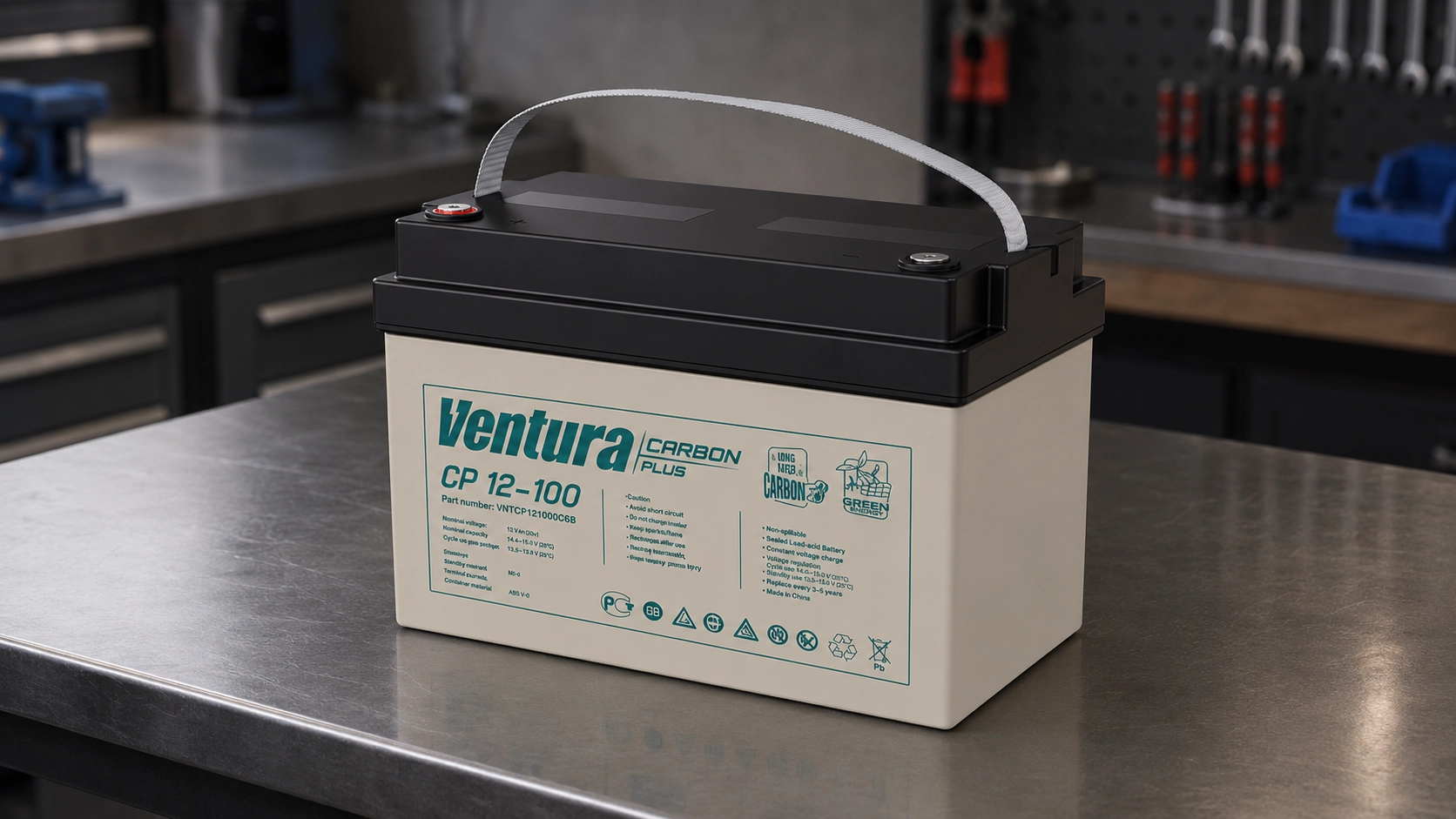
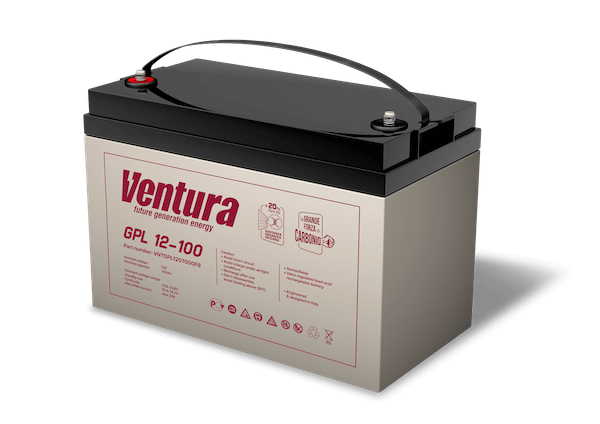
AGM (Absorbent Glass Mat) is a technology in which the liquid electrolyte is completely absorbed by a highly porous fiberglass separator tightly pressed to the plates. This arrangement minimizes the internal resistance of the battery and provides high instantaneous current output - therefore, AGM batteries are often used in UPS systems, server infrastructure, banking and telecommunications facilities. When switching to backup power, the battery must quickly deliver current to the load and keep the voltage within an acceptable range - AGMs are suitable for such scenarios due to their low internal resistance.
AGM batteries are optimally suited for float mode with infrequent, shallow discharges, for example, for many backup power supply systems. The line covers capacities from 1.2 to 250 Ah with rated voltages of 2 V, 4 V, 6 V and 12 V. Depending on the series and operating conditions, the service life of AGM batteries in float mode can be 5-12 years according to the Eurobat classification; The recommended float charge voltage for 12 V batteries is 13.5-13.8 V. The maximum permissible charge current reaches 0.25-0.3 C, which ensures rapid replenishment of the charge after a short-term power outage and reduces the time the system returns to full readiness mode.
Due to their low internal resistance, AGM batteries operate reliably at discharge currents of 5-10C, which is critical for high-power UPSs, telecommunications equipment with high inrush currents and other systems with short-term peak loads. A wide range of standard sizes, different terminal options (M5, M6, M8, Faston) and compliance with IEC 60896-21/22 standards ensure compatibility with equipment from leading manufacturers of UPS, security systems and telecommunications infrastructure.
Main differences between AGM and GEL batteries
Despite belonging to the same class, VRLA, AGM and gel batteries differ in a number of key technical parameters that determine their suitability for specific applications. It is important to understand these differences at the system design stage - this is when the estimated service life of the battery bank, charge-discharge mode and total cost of ownership are determined.
Below is a detailed comparison of the parameters most relevant to engineers, designers and field technicians.
-
Electrolyte type. In AGM batteries, the liquid electrolyte is absorbed into a fiberglass mat located between the plates. In gel batteries, the electrolyte is thickened with silicon dioxide and fixed in a gel-like structure. Both types are sealed and maintenance-free, but the gel provides additional protection against electrolyte separation under prolonged cyclic loads.
-
Cycle life. Gel batteries demonstrate a significantly higher cycle life at deep discharges: 400-1500+ cycles at DoD 50-80%. AGMs are optimal for float mode and provide 200-500 cycles at deep discharge, but in standby use they remain operational for 5-12 years.
-
Deep discharge. GEL technology is structurally adapted to systematic discharges up to 80% DoD without accelerated degradation. AGM batteries are preferred for shallow discharges up to 20-30% DoD, typical for UPS backup mode.
-
Charging speed. AGMs allow higher charging currents - up to 0.3C, which speeds up recharge after discharge. Gel batteries should be charged with a current of up to 0.2C with mandatory adherence to the charge profile recommended by the manufacturer.
-
Self-discharge. Both types have low self-discharge - no more than 1-3% per month at +20°C. This allows batteries to be stored for up to 6-12 months without recharging, subject to the recommended storage conditions.
-
Temperature conditions. The operating range of both types is from -20°C to +60°C. AGM tolerates short-term heating somewhat better. When systematically overheated above the permissible limit, a gel electrolyte can change its structure, so for GEL it is especially important to ensure temperature compensation of the charge and normalized thermal conditions in the room.
-
Service life. In float mode, AGM batteries last 5-12 years. When used cyclically with the correct charging algorithm, gel ones provide a comparable overall service life due to the high number of operating cycles.
Comparison table for AGM and GEL batteries
|
Parameter |
AGM |
GEL/V-Gel |
|
Electrolyte type |
Absorbed in glass mat |
Thickened with SiO₂ |
|
Basic operating mode |
Float (standby) |
Cyclic and float |
|
Optimal depth of discharge |
Up to 30% DoD |
Up to 80% DoD |
|
Cycle life |
200-500 cycles |
400-1500+ cycles |
|
Float service life |
5-12 years |
7-12 years |
|
Max. charge current |
Up to 0.3C |
Up to 0.2C |
|
Internal resistance |
Low (2-30 mOhm) |
Somewhat higher |
|
Operating temperature range |
-20...+60°C |
-20...+60°C |
|
Sensitivity to charge voltage |
Moderate |
High |
|
Mounting position |
Vertical, inclined possible |
Non-standard position is possible if allowed by the manufacturer |
|
Typical Application |
UPS, data center, banks, medicine, telecom |
energy storage systems, traction, telecom, medicine, solar systems |
Advantages of GEL batteries compared to AGM:
- withstand more charge-discharge cycles;
- completely restore capacity after deep discharge;
- less sensitive to “bad” charge from an unstable network;
- withstand discharge from an undercharged state without loss of capacity (repeated disconnection of the network when the batteries have not yet been charged);
- can work in cyclic mode;
- tolerate work better in both cold and high temperatures;
- Thermal breakdowns between the plates are practically eliminated.
Disadvantages of GEL batteries compared to AGM:
- when discharged with a high current - more than 1/5 of the battery nominal value, the delivered capacity is significantly less than the nominal one (gel batteries simply “do not have time” to give their nominal value)
- very sensitive to overcharging (higher current, higher voltage than recommended - and gel batteries “boil”, losing capacity)
- reach the nominal capacity only after 15-20 discharge-charge cycles.
Advantages of AGM batteries compared to GEL:
- with equal capacity they are about 10-15% cheaper than gel ones
- work better when discharging with high currents (high power)
- higher maximum charge rate (6-8 hours AGM versus 8-10 hours GEL), because better tolerate charge with higher current
Disadvantages of AGM batteries compared to GEL
In fact, all the advantages of gel are the disadvantages of AGM. But the main disadvantages of AGM batteries:
- shorter service life with deep discharges, irreversible decrease in capacity with full discharge
- You must not leave it in a discharged state, even for a day; you must not discharge an undercharged AGM battery, otherwise its capacity will be irreversibly reduced!
GEL or AGM battery – which one to choose?
Both types perform their tasks perfectly if they are correctly selected for the application. The choice is determined by the operating mode of the system, the depth and frequency of discharges, current output requirements, operating conditions and the type of connected equipment. That is why competent technical selection is the first step when forming a battery bank for any facility.
For UPS and power backup
For many UPS systems in data centers, server rooms, banking infrastructure, medical institutions and administrative facilities, AGM batteries are more often chosen. Float mode operation with rare and generally shallow discharges, high requirements for instantaneous current output when switching to backup power and a long service life without maintenance - all this corresponds to the strengths of AGM technology. The Ventura AGM series (GP, GPL, HR) cover the range from 1.2 to 250 Ah and are compatible with equipment from leading global and Russian UPS manufacturers - APC, Eaton, Schneider Electric, Emerson, Huawei, STARK COUNTRY and others.
When designing battery sections for a UPS, it is important to consider not only the capacity, but also the power per unit (W/cell), allowable discharge current, cutoff voltage, and rack mounting configuration. Ventura provides a complete package of technical documentation, including discharge curves, internal resistance data and recommendations for integration into specific UPS models.
For solar power plants
In stand-alone and hybrid solar systems, the battery goes through a full charge-discharge cycle every day, often with an uneven charge profile depending on insolation. This is where the Ventura GEL and V-Gel gel batteries reveal their strengths: high cycle life, resistance to partial charge (PSoC - Partial State of Charge), low self-discharge and stable characteristics with seasonal temperature changes. The Ventura PRO series is additionally designed for use in energy storage systems with increased service life requirements.
For solar facilities with a daily charge-discharge cycle and seasonal operation, gel batteries can be more profitable over a long horizon if their design life, charge mode and operating conditions correspond to the design model. This makes GEL technology a cost-effective choice for remote, off-grid sites where routine battery replacement incurs logistical costs.
For traction equipment and electric transport
Electric forklifts, electric trucks, tractors and mobile warehouse equipment operate in a rigid cyclic mode with deep discharges during each work shift. The battery must provide stable current for 6-8 hours of operation, withstand peak loads during climbing and acceleration, and then fully replenish its energy reserve during an overnight charge. Traction gel batteries are designed specifically for such conditions: they provide stable current output throughout the entire discharge curve, preserve their service life during many years of daily use, and allow installation in non-standard positions without the threat of electrolyte leakage.
Traction gel batteries can reduce maintenance labor costs because they do not require topping up with distilled water or monitoring the density of the electrolyte. The impact on downtime and the composition of the battery fleet depends on the operating mode of the equipment and charging infrastructure.
For systems with regular deep discharges
Self-powered telecommunications towers, wind power plants, security systems at remote sites - wherever the battery is regularly discharged to 50-80% DoD, GEL technology provides high cost-effective operation. The high cycle life of gel batteries can increase the replacement interval and reduce the cost of operating a battery fleet if the operating mode corresponds to the design conditions. At the same time, the maintenance-free design and sealed housing allow them to be used on sites without the presence of maintenance personnel.
Conclusion
AGM and gel batteries represent two reliable and technologically proven solutions for backup and autonomous power supply applications. Each type has a clearly defined area of optimal application: AGM - for standby systems with high requirements for instantaneous current output and a minimum number of discharge cycles, GEL and V-Gel - for cyclic applications, regular deep discharges and objects with a priority on the long-term life of the battery bank. The choice of technology at the design stage affects battery life, maintenance regime, requirements for charging equipment and the stability of the power supply system.
Frequently asked questions
Is AGM a gel battery or not?
Which battery lasts longer - AGM or GEL?
Which is better - gel or AGM battery?
Is it possible to replace an AGM battery with a GEL one?
Which is better for solar panels - AGM or GEL?
Which tolerates deep discharges better - AGM or GEL?