Cyclic and Float Battery Operation: What Is the Difference and Why Does It Matter?


 3 min read
The same battery can be used in different modes. In one case, it regularly releases the accumulated energy and is charged again, in the other, it remains fully charged most of the time and is connected to the load at any time.
Therefore, the documentation contains the designations cycle use and standby/float use. Cyclic and float modes of battery operation differ in requirements for charge voltage, discharge depth and service life. For rechargeable batteries, these parameters are taken into account along with voltage, capacity and operating conditions.
Battery cyclic mode: why frequent charges and discharges consume the service life faster
In this scenario, the battery regularly participates in powering the equipment: charge → operation from the battery → discharge → recharge. The number of cycles, depth of discharge, load current and temperature are important for selection.
What is battery cycling
This is an operation in which the battery regularly releases most of its stored energy and is then charged again. The battery in this mode is a working source of energy, and not just a reserve.
In short, this is a sequential alternation of discharge and charge. This is how equipment that regularly receives energy from the battery works.
How the charge and discharge cycle works
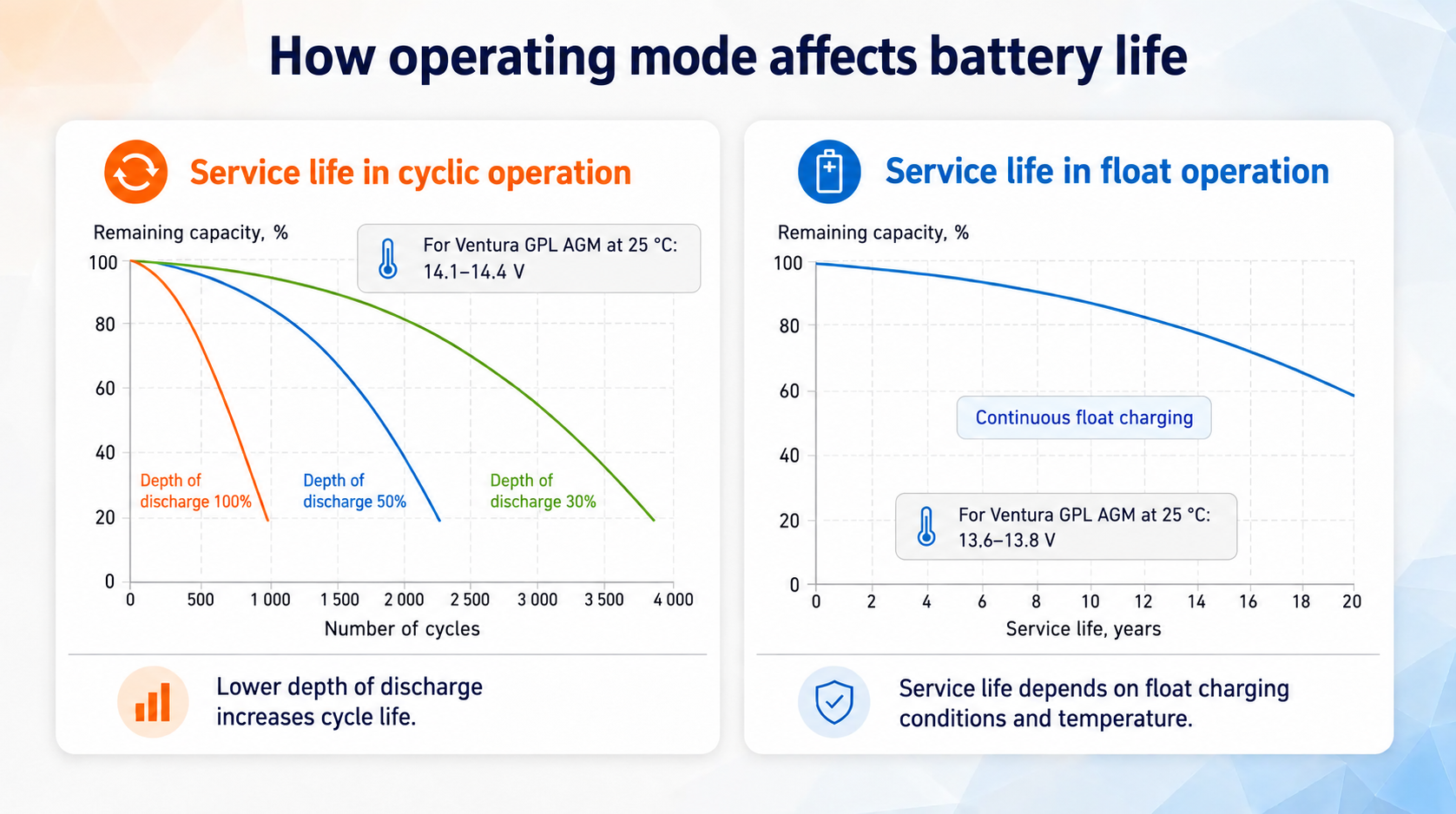
One cycle involves discharging the battery and then restoring the charge. The service life depends not only on the number of charge-discharge cycles, but also on the capacity removed each cycle. The discharge depth is especially important: the higher it is, the lower the number of cycles available. Ventura operating documentation lists depth of discharge as one of the main factors determining battery cycle life.
Where you need a cyclic mode for the battery
This mode is used in energy storage systems, solar and wind power plants, warehouse equipment, industrial electric transport and autonomous systems.
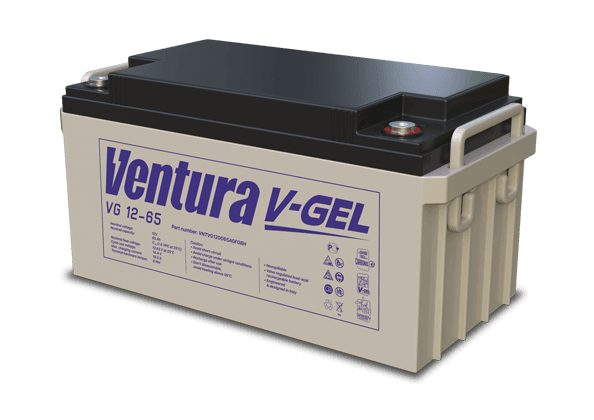
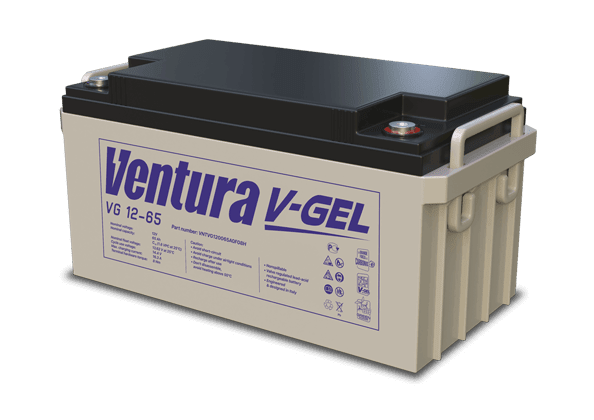
For intensive loads, batteries with a high cycle life are used. Ventura V-Gel batteries are suitable for applications where stable energy output with regular use of stored energy is important; the series has a rated voltage of 12 V and a high cycle life.
Battery float mode: why float charging can extend its service life
In standby systems, the battery is connected to a charger and kept charged. Energy from the battery is required when the equipment switches to backup power.
What is battery float mode
In the documentation, this mode is referred to as standby use, float use, or float charging mode. The charger maintains the battery in a ready state at the voltage specified by the manufacturer.
The battery is in standby mode most of the time. If the recommended charge voltage and temperature are observed, this scenario allows you to use the battery life without regular deep discharge cycles. Ventura documentation defines float charging mode as unlimited in time and designed to keep the battery fully charged.
How the battery works when constantly recharged
When main power is present, the load receives power from the mains and the battery remains charged. When the system switches to autonomous power supply, the battery begins to transfer energy to the equipment.
Once the main power is restored, the charge is replenished and the battery goes back into reserve. Uninterruptible power supplies, server and telecommunication systems operate according to this scheme.
Where is float mode used
The main areas are UPS, data centers, telecommunications, medical equipment, banks, security and fire systems and energy. Batteries for such systems are selected according to voltage, capacity, load power, battery life, temperature and charging equipment parameters. For stationary solutions, maintenance-free AGM batteries are in demand.
Cyclic and float battery modes: a difference that cannot be ignored when choosing
In cyclic mode, the battery regularly supplies the load; in float mode, it mainly serves as a backup.
For the first, it is important how many cycles the battery can provide at a given depth of discharge. For the second, the service life with float charging is of key importance.
Therefore, battery operating modes are determined at the design stage. The requirements for service life, charge voltage and charger characteristics depend on this.
Comparison of battery operating modes
|
Parameter |
Cyclic mode |
Float mode |
|
The role of the battery |
Main source of energy |
Backup source |
|
Charge and discharge |
Regular cycles |
Float charging |
|
Deep discharge |
Available regularly |
Usually rare |
|
Basic Requirement |
High cycle life |
Long standby life |
|
Typical Application |
Electric transport, energy storage devices, technology |
UPS, communications, security, emergency systems |
|
Impact on service life |
Depends on depth and number of cycles |
More gentle operating scenario |
In addition, the series datasheet is checked: voltage, capacity, charge current, temperature range, type of terminals and dimensions.
Why does the charge voltage depend on the mode
A single AGM battery may have different values for float charging and cyclic operation. In the first case, the charge maintains the readiness of the battery, in the second, it restores capacity after an operating discharge.
For example, the Ventura GPL at 25°C specifies 13.6-13.8V for float charge and 14.1-14.4V for cycling applications. Model GPL 12-65 has a nominal voltage of 12 V, a capacity of 71 Ah C20, a maximum charge current of 19.5 A and an F6 terminal.
Which mode to choose so as not to shorten the battery life
The choice begins with determining how often the battery discharges energy and how much runtime is required. The parameters are then compared with the specific series documentation. For fixed systems, additional considerations include placement, ventilation, and installation configuration.
If the battery constantly powers the equipment
For regular energy release, choose a battery with a high cycle life. The dependence of the number of cycles on the discharge depth and the calculated load current are taken into account.
Such solutions are used for warehouse equipment, energy storage devices and industrial electric vehicles, including special-purpose electric vehicles. For tasks requiring resistance to deep discharges, the discharge characteristics of a specific series are used.
If the battery is needed only when the power is turned off
For UPS, communications, data centers and security systems, the main mode is usually float charging. What is important here is the design life, compatibility with the charger and stability of characteristics. The selection is made based on the rated voltage, required backup duration, load power and battery circuit configuration.
Is it possible to use one battery in two modes
Yes, if this is provided in the manufacturer's documentation. Universal series can operate with float charging and cyclic operation, but different charge parameters are set for them.
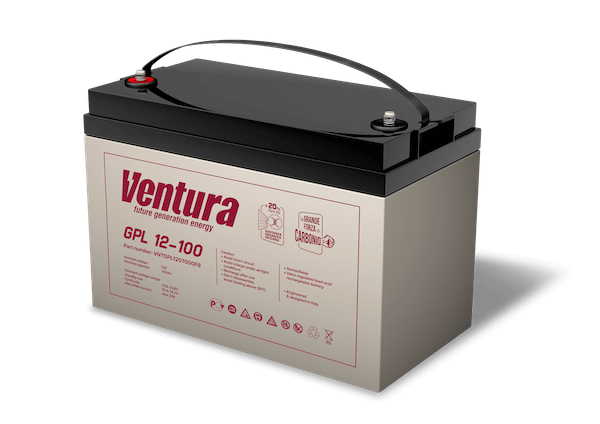
Example – Ventura GPL. The batteries in this series are made using AGM technology, have a rated voltage of 12 V and are designed for both float charging and cyclic use.
Conclusion: which battery mode is suitable for your task
The choice depends on the role of the battery in the system: for regular operation under load, the cycle life is important; for backup power, the float charging characteristics and design life are important.
Cyclic mode - for regular energy release
This option is suitable for equipment that regularly uses stored battery energy. When selecting, take into account the number of cycles, discharge depth, load current and charging method.
Float mode - for backup power
This option is suitable for UPS, data centers, telecommunications and security systems, where the battery is in reserve most of the time. When selecting, the float charging voltage, temperature, required backup duration and specified service life are taken into account.
Frequently asked questions
What is battery cycling in simple words?
How does cyclic mode differ from float mode?
What does cyclic battery charging mean?
How does cycling affect battery life?
What voltage should I set for cyclic and float mode?
Can the UPS battery be used in cyclic mode?