How traction batteries differ from starter batteries


 2 min read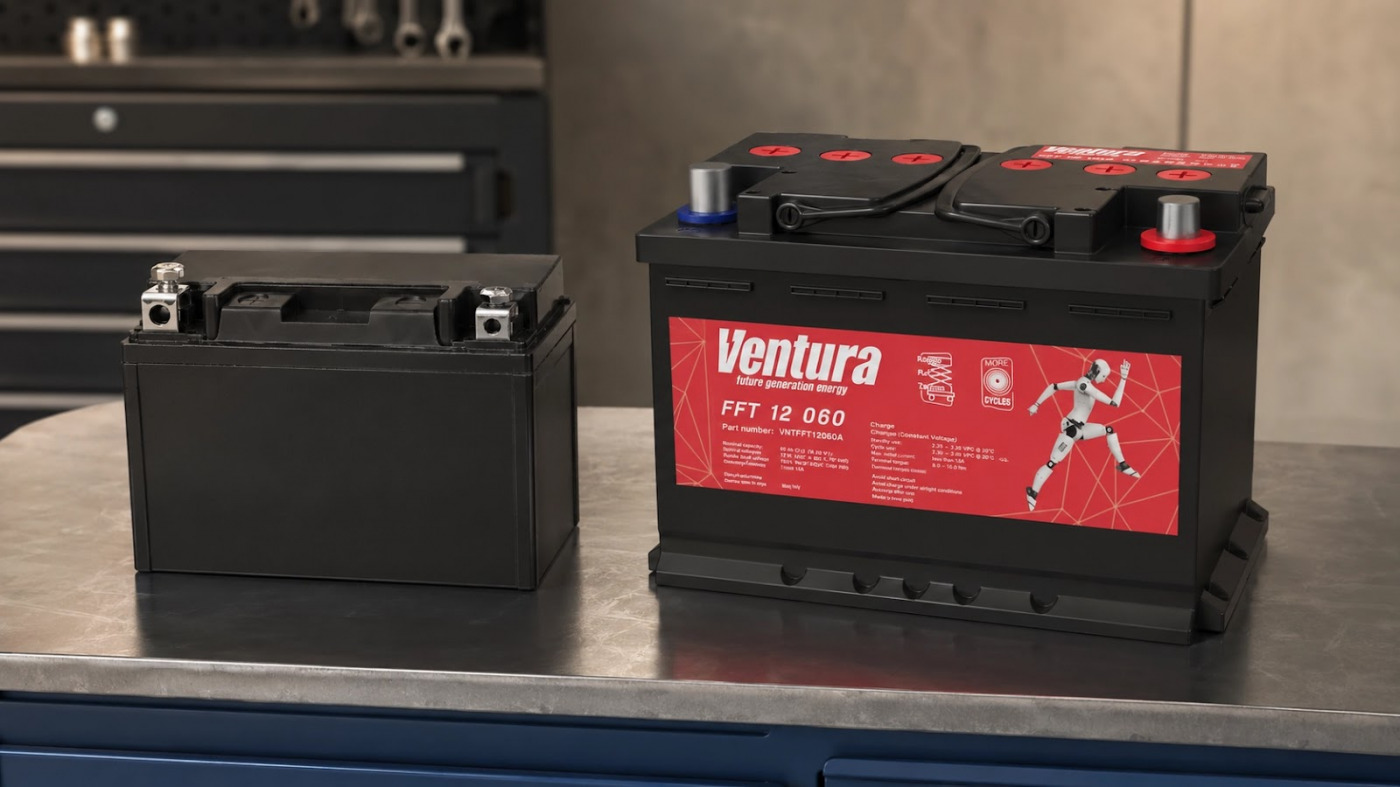
Both types may be lead-acid batteries and may look similar in appearance, but their purpose, design and mode of operation are fundamentally different
A clear understanding of these features allows you to accurately select a battery for the task: an electric forklift in a warehouse, a tractor at a production facility, an inverter in a backup power system, or special equipment in intensive shift work conditions.
When choosing a battery, it is important to consider not only the voltage and capacity, but also the load profile, namely how many hours the equipment works without recharging, how often charge-discharge cycles occur, whether there are peak currents and downtime between shifts. The same battery can behave differently in a backup system, in a warehouse or in electric vehicles, so selection begins with determining the operating mode.
What is a starter battery?
The starter battery is designed for one task - to briefly provide a high starting current to start the internal combustion engine. That is why a large number of thin plates are used in its design: the maximum contact area with the electrolyte provides a powerful current pulse in the first seconds of operation.
Once started, the engine is powered by the generator and the battery returns to standby mode. Long-term discharge is contraindicated for it: thin plates are optimized for short but high current, and not for a uniform multi-hour load. For this reason, it is technically impractical to use starter batteries for long-term or backup power.
What is a traction battery?
This battery is designed for long-term power supply of electrical equipment: it provides stable voltage and smooth current for several hours, is designed for deep discharges and maintains performance characteristics over many charge-discharge cycles. Such batteries are used on warehouse equipment (trackless floor-mounted electric transport - a movable transport mechanism that moves along a solid horizontal (or slightly inclined) floor of industrial premises, warehouses and workshops without the use of rail tracks, mainly on wheels), street sweepers, electric wheelchairs, electric cars, as well as in energy storage systems based on solar and wind power plants.
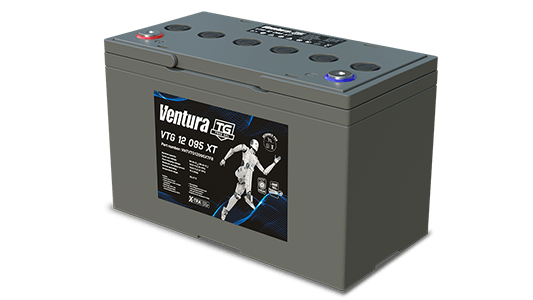
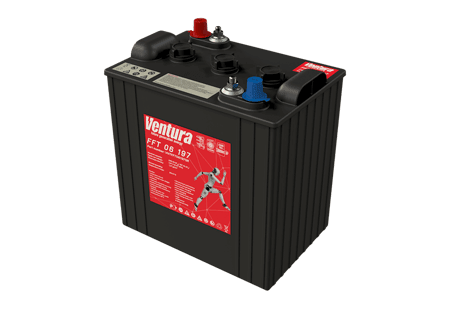
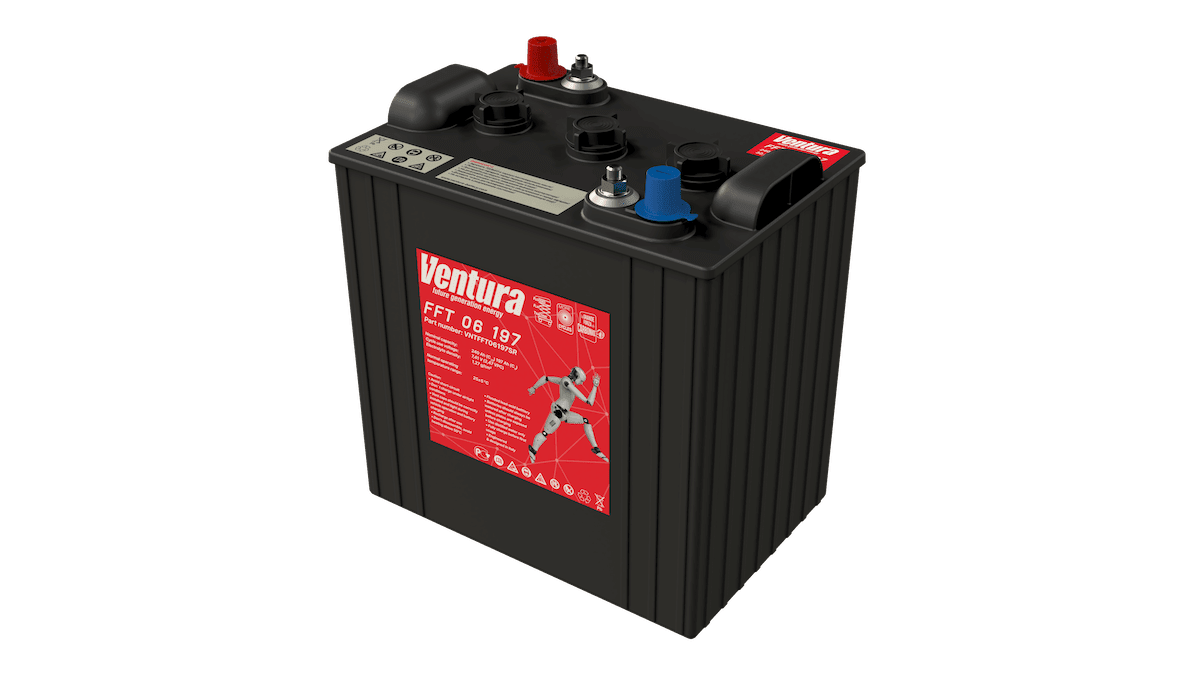
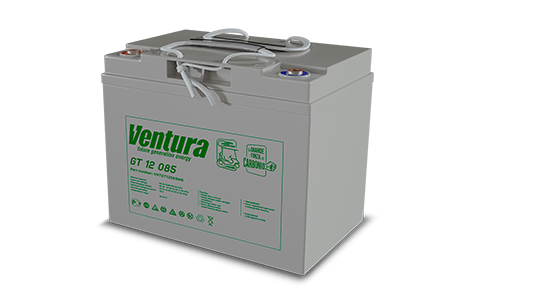
Ventura offers traction batteries of the FFT, GT and VTG XT series for warehouse equipment, electric vehicles and other electric applications - with a high cyclic resource, different design technologies and deep discharge parameters, which depend on the specific series and passport conditions.
The depth of discharge is taken into account separately. The more the battery is discharged in each cycle, the higher the load on the plates and active mass. Therefore, in calculations it is important to leave a reserve of capacity, and not to select a power source “butt-to-tail”. This approach helps extend service life and reduce the risk of premature capacity loss.
Design differences between traction and starter batteries
The main structural difference is in the structure of the plates. The starter battery contains many thin plates with an active surface: this provides high current in the first seconds, but reduces resistance to long-term loads. Batteries for long-term power supply have thick plates with a reinforced active layer - they determine durability during cyclic operation and the ability to withstand deep discharges without rapid capacity degradation.
The chemical composition of the active mass of traction batteries includes special alloying additives that reduce corrosion of current-carrying grids and slow down sulfation. Models in AGM, V-Gel or TRUE GEL are available in a sealed, maintenance-free housing. Although outwardly similar to conventional starter models, the traction battery behaves fundamentally differently under load: the voltage decreases smoothly, which is critical for sensitive electronics and equipment control systems.
It is equally important to comply with all battery charging requirements. Different technologies use their own charging algorithms and voltages, so the charger must comply with the type of battery and the manufacturer’s recommendations. An unsuitable charge profile can accelerate sulfation, overheating, or loss of capacity, even if the battery itself is properly sized.
Comparison of traction and starter batteries
| Parameter | Starter battery | Traction battery |
| Main purpose | Starting the internal combustion engine, short-term release of high current | Long-term power supply of electrical equipment |
| Plate design | Thin, numerous | Thick plates, reinforced active layer |
| Deep discharges | Not recommended (below 50% – resource decreases) | Acceptable up to 70-80% DOD |
| Cyclic resource | 50-150 cycles at deep discharge | 300-1500 cycles depending on technology |
| Starting Current (CCA) | High – 50–700 A depending on the vehicle and engine type, | Moderate |
| Service life under cyclic load | 1-2 years | 3-8 years or more |
| Typical Applications | ICE vehicles, gasoline and diesel generators | Loaders, electric equipment, inverters, energy storage systems |
| Execution | Serviced or unserviced | Depends on technology: maintenance-free or low-maintenance FLA/PzS/PzB, maintenance-free AGM, V-Gel or TRUE GEL |
Why choose Ventura traction batteries?
Ventura has several technology solutions to suit different operating conditions. AGM models are advisable to use where tightness, maintenance-free design and vibration resistance are important. TRUE GEL solutions are suitable for long cycles and applications where increased resource is required. Series with liquid electrolyte are used in technology where maintainability, high capacity and intensive operation are important.
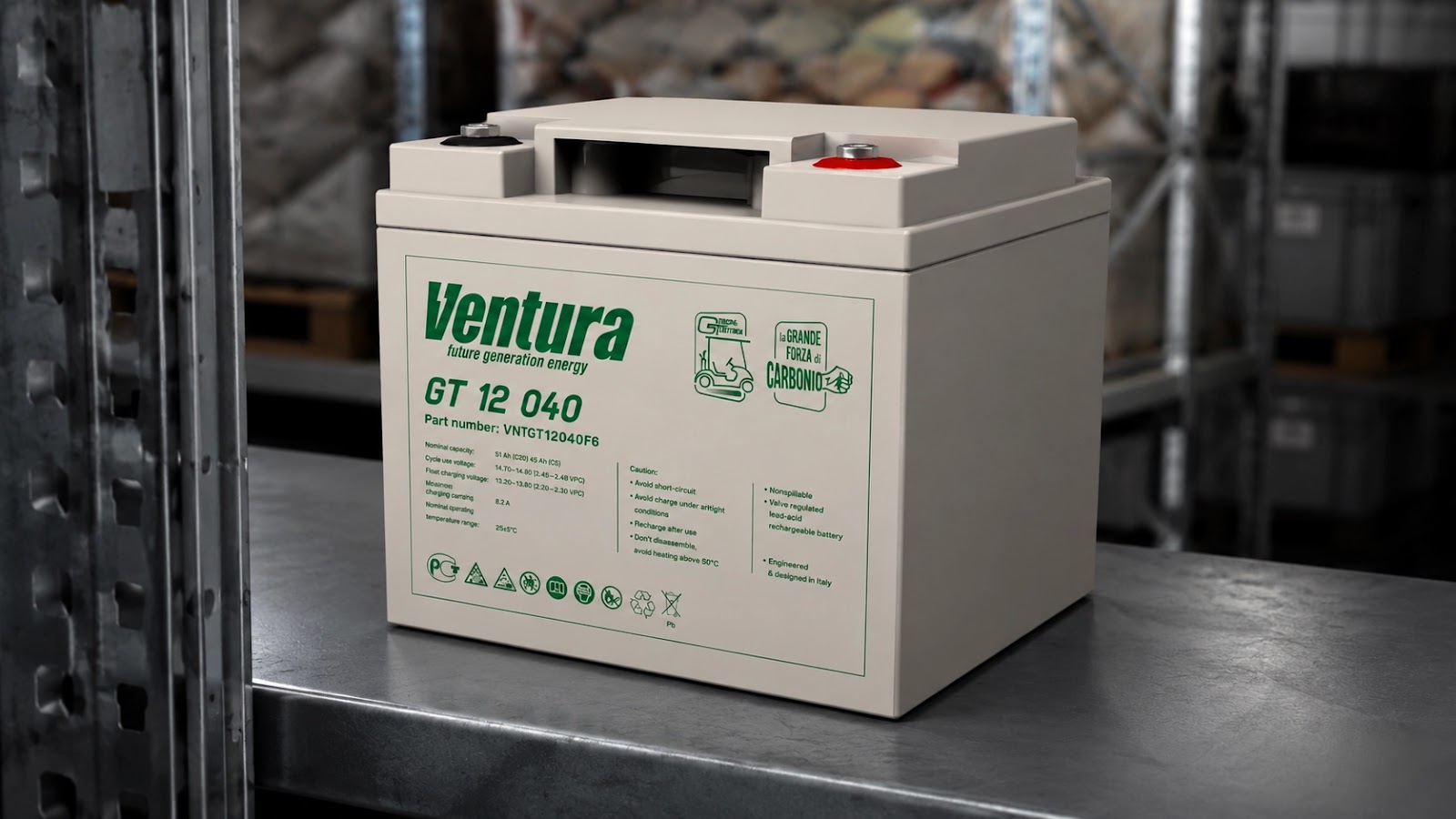
Ventura offers traction batteries for different operating modes: the GT series is made with AGM technology, the VTG XT series with TRUE GEL technology, and the FFT series with liquid electrolyte. These solutions are designed for traction applications and high cyclic life.
V-Gel technology uses special thickening additives that help evenly distribute the density of the electrolyte inside the battery, protect the plates from sulfation and slow down corrosion. This is especially important for multi-shift warehouse equipment and for energy storage systems with variable load profiles. Each Ventura battery is accompanied by technical documentation: passports and certificates.
Key advantages of Ventura traction batteries:
- confirmed cyclic life – from 400 to 1200+ cycles;
- resistance to deep discharges (subject to the specified discharge depth and charge mode);
- maintenance-free solutions AGM, V-Gel and TRUE GEL;
- wide range of operating temperatures (depending on the series and operating mode; for example, for GT 12 040, discharge and charge are allowed at –20...+50 °C);
- compatibility with various chargers (with correct charge profile settings);
- Technical support in selection for specific equipment and type of object (see contacts in the appropriate section).
Ventura provides direct supplies to corporate clients and support of a dealer network throughout the EAEU - including the areas of warehouse equipment, electric vehicles and energy storage systems.
Conclusion
The difference between a traction battery and a starter battery is not only in the markings, but also in the principle of operation, the structure of the plates and operating modes. The starter battery is optimal where short-term high starting current is needed. Traction battery is a solution for long-term power supply of electrical equipment, cyclic operation and objects with high requirements for stability of power supply.
Frequently asked questions
Is it possible to use a traction battery instead of a starter battery?
Technically possible, but impractical. The traction battery is designed for a uniform, long-term discharge, and not for a powerful impulse to start the engine. Traction batteries have a lower starting current, so starting the engine may be difficult in cold conditions. Traction batteries should be used strictly for their intended purpose - for long-term power supply of the electric drive.
Is it possible to install a starter battery instead of a traction battery?
Replacing the traction battery with a starter battery means significantly reducing the service life of the power source. The starter battery is not designed for deep discharges: with a systematic discharge of more than 50%, the capacity quickly decreases and frequent battery replacements will be required. From an economic point of view, this increases the total operating costs.
Which is better - a traction or starter battery?
Traction and starter batteries solve different problems: a starter battery is optimal for short-term inrush current and starting the engine, a traction battery is optimal for many hours of operation in cyclic mode. The choice is determined not by price or dimensions, but by the load profile and type of equipment.
What lasts longer - traction or starter?
Under cyclic load, the traction battery lasts much longer: 3-8 years versus 1-2 years for a starter battery under similar conditions. Thick plates, a reinforced active layer and a special chemical composition provide a service life of 400 to 1200+ cycles. For heavy-duty applications, this reduces battery replacement and service costs
Is the traction battery suitable for the inverter?
Yes, these batteries are suitable for inverters and cycling power backup systems. They provide stable voltage during long-term discharge and are designed for repeated charge-discharge cycles subject to the recommended operating conditions. For an inverter, the model is selected according to the duration and depth of the discharge, and the requirements of the charger: the GT and VTG XT traction series are suitable for cyclic autonomy, and Ventura PRO is suitable for UPSs with short high-current discharges.
FFT (Flooded Flat Traction)
Learn more
FFT
GT (General Traction)
Learn more
GT
VTG XT (Ventura TRUE GEL X-TRA)
Learn more
VTG XT