Storing Solar Energy: How to Choose Batteries for Solar Panels


 4 min read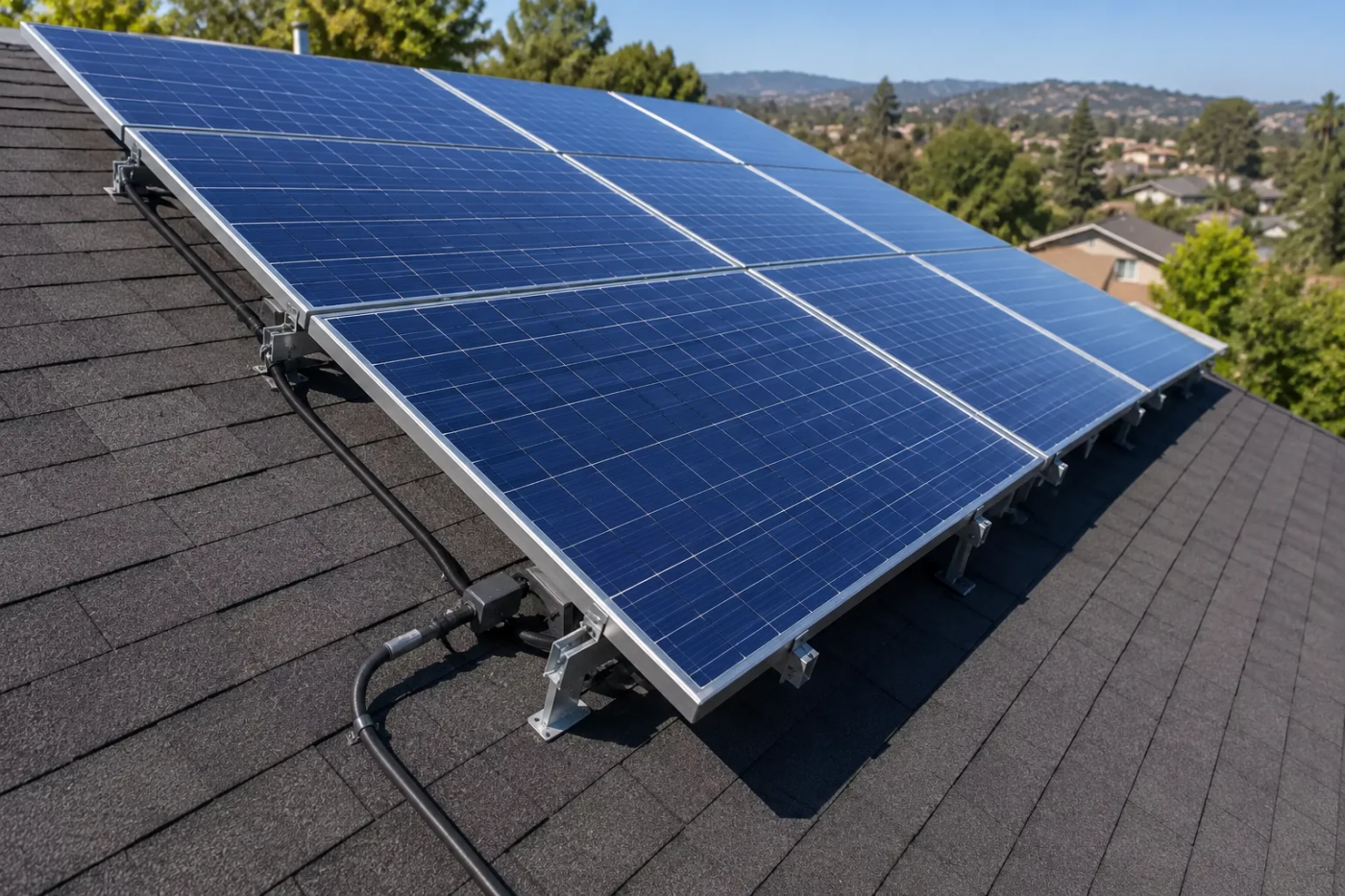
Solar generation is not stable and depends on the time of day, season and weather conditions, therefore, for a stable power supply, the generated energy must be accumulated. This function is performed by batteries: they accept charge during periods of active generation and release energy when the power of photovoltaic modules is not enough.
To choose the right battery for solar panels, take into account the daily consumption of the site, the depth of discharge, the cycle life, the voltage of the battery system, the parameters of the controller and inverter.
Why does a solar system need a battery
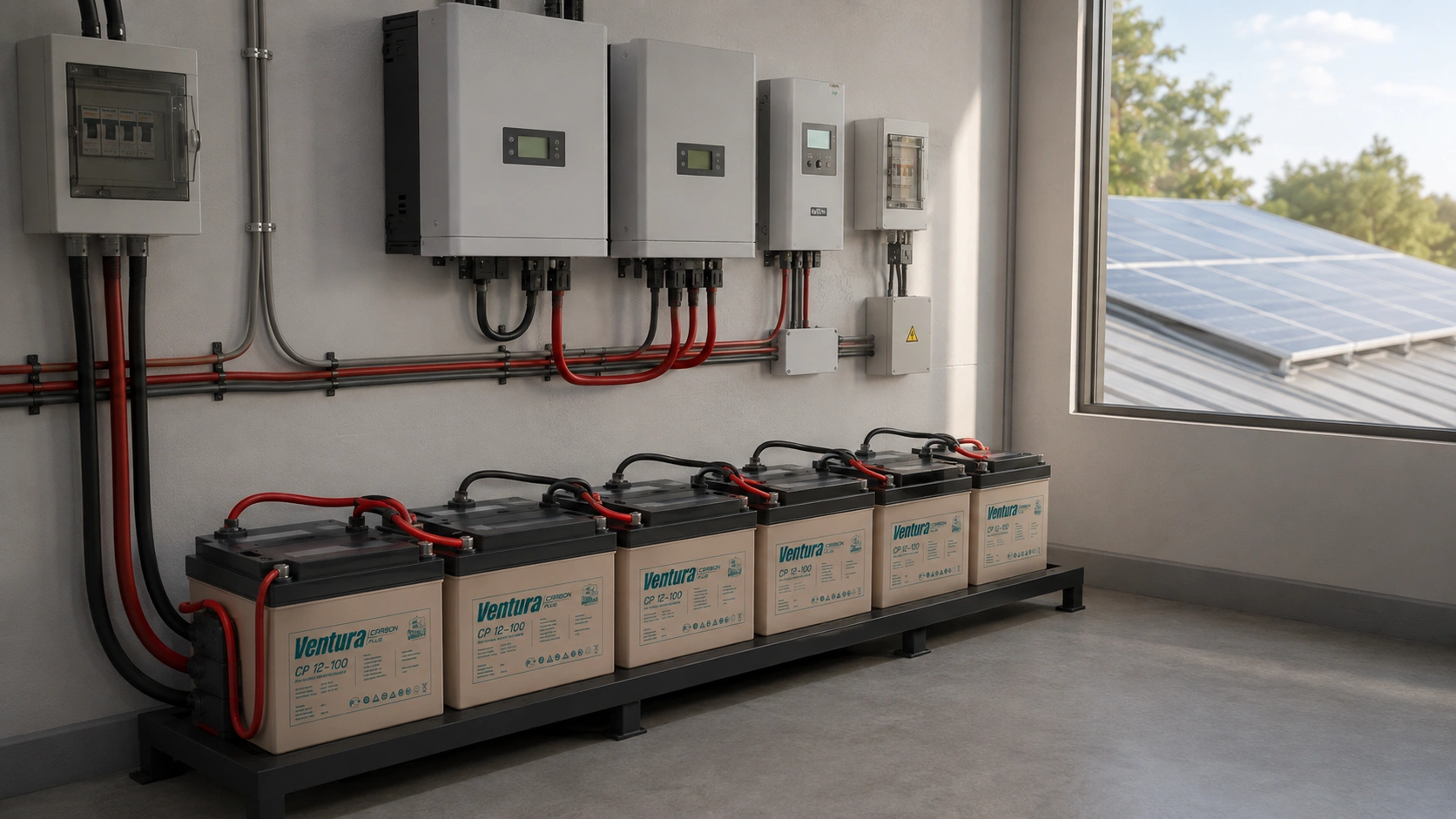
Batteries allow you to create a reserve of electricity. During the day, solar panels can produce more energy than the equipment requires, and in the evening and at night the accumulated reserve is used to power the load.
How a battery stores energy from solar panels
A typical circuit includes photovoltaic modules, a charge controller, batteries and an inverter. The controller controls charging, the battery stores energy, and the inverter converts the DC voltage of the battery circuit into the parameters required by consumers. The power of the panels and the storage capacity are different characteristics. The first determines the generation capabilities, the second determines the available energy supply.
How do batteries for solar panels differ from backup batteries
Solar energy is characterized by regular charge and discharge cycles. Therefore, the cycle life, permissible depth of discharge and the ability to effectively accept a charge with variable generation are especially important.
Batteries for solar systems are selected according to actual operating conditions. For daily cyclic operation, batteries of specialized series are designed for repeated accumulation and release of energy.
AGM, GEL, Lead-Carbon or LiFePO4 - which type will withstand daily cycles
There is no universal technology for any object. The battery type is selected based on the required backup duration, cycling intensity, available space, charging equipment and environmental parameters
AGM – proven technology for solar systems
In AGM batteries the electrolyte is retained by a fiberglass separator. The sealed design, ease of use (maintenance-free batteries), stable electrical characteristics and a wide range of capacities make the technology in demand in stationary power systems.
For regular cycling, it is important to use specialized AGM series with appropriate discharge characteristics and service life.
Lead-Carbon - when a cycle life comes to the fore
Lead-Carbon solutions use carbon additives to improve battery performance during cycling and operation in a partially charged state.
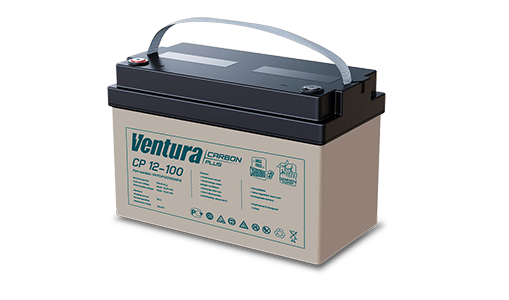
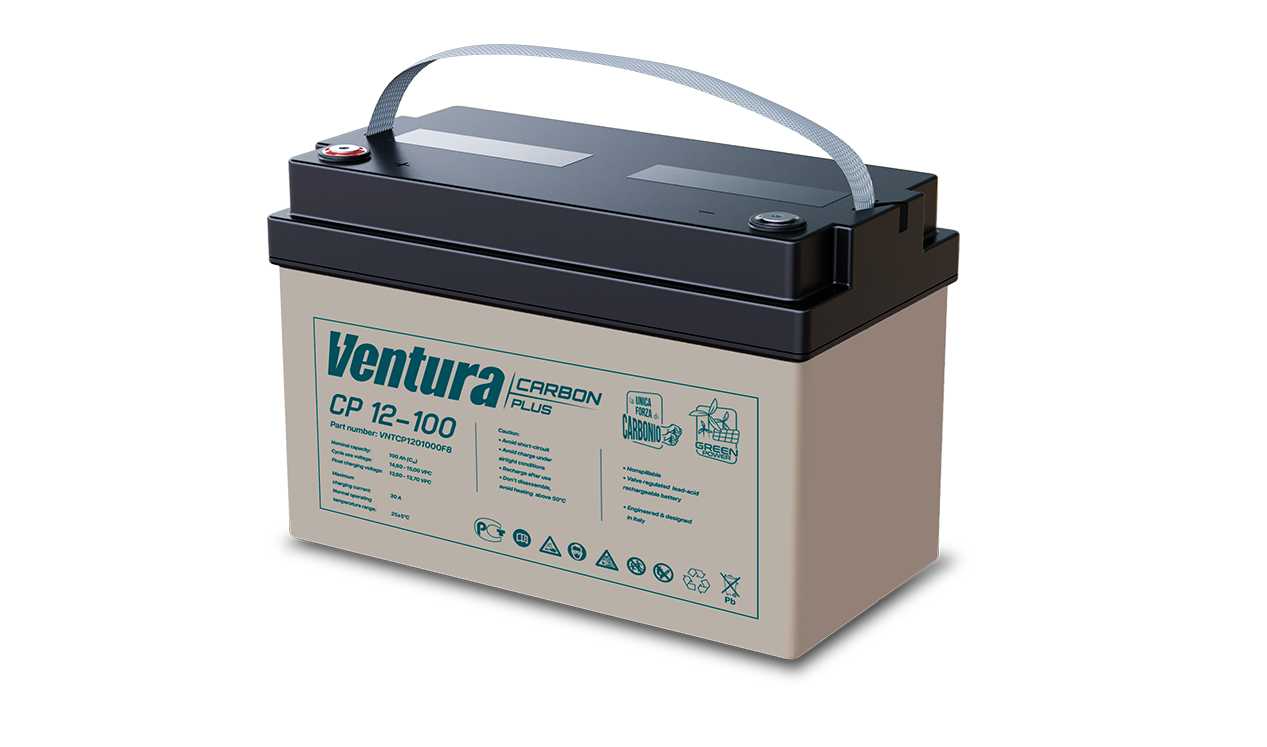
The Ventura CP series is produced using AGM and Lead-Carbon technologies and is available in 2, 6 and 12 V models with capacities up to 3000 Ah. The line is focused on energy storage systems and renewable energy.
GEL and TRUE GEL – a solution for deep cycling
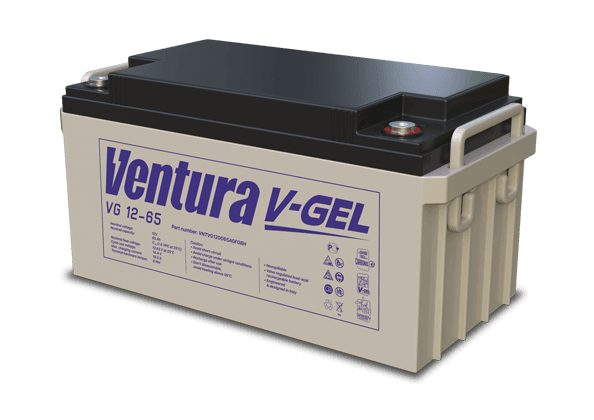
In gel batteries, the electrolyte has a jelly-like structure. Such batteries are used in float and cyclic mode, including stationary alternative energy systems.
LiFePO4 – technology using lithium
LiFePO4 is in demand in projects where high cycle life, compactness and high energy density are important. For this configuration, it is necessary to ensure compatibility of the battery with the BMS, controller and inverter charging algorithm.
Why does a starter car battery not replace a cyclic battery
Starter batteries are designed primarily for short-term high current output. Solar systems require a different regime - regular accumulation of energy followed by a long discharge.
How to quickly compare technologies before choosing
|
Technology |
Cyclic mode |
Deep discharges |
Maintenance |
Optimal application |
|
AGM |
Suitable |
Depends on the series |
Not required |
Reserve and moderate cycling |
|
Lead-Carbon |
Long service life |
Suitable |
Not required |
Solar energy, energy storage systems |
|
V-Gel / TRUE GEL |
Long service life |
Suitable |
Not required |
Cyclic and stationary systems |
|
LiFePO4 |
Long service life |
Suitable |
BMS |
Specialized projects |
Beyond the 100 Ah Label: Which Battery Parameters Really Matter?
Capacity remains one of the main criteria, but it is incorrect to evaluate it separately from voltage, discharge mode and service life. Two batteries with the same Ah value may provide different useful energy reserves.
Nominal and usable capacity
The rated capacity is specified for certain discharge conditions. For energy calculations, it is convenient to convert it into watt-hours: for example, 100 Ah at 12 V corresponds to 1200 Wh of rated energy. The actual available reserve depends on the permissible discharge depth and the characteristics of the selected model.
Discharge depth DoD
DoD shows what proportion of the stored energy is used in one cycle. This indicator is associated with both backup duration and cycle life. Therefore, when comparing batteries, not only Ah, but also the number of cycles at a specific depth of discharge are taken into account.
Battery system voltage
For small installations, 12 or 24 V systems are used, for more powerful ones - 48 V and higher. The required voltage is formed by connecting identical batteries in series and must correspond to the operating range of the inverter.
Self-discharge and partially charged state
For solar systems, these characteristics are important due to uneven generation. Ventura CP is also designed for operation in a partially discharged state, which makes the series relevant for cyclic energy storage systems. Temperature, dimensions, weight and placement conditions are also checked according to the technical data sheet of a specific battery and the requirements of the project.
How to determine the capacity of batteries for solar panels
The calculation begins with the consumption of the facility, and not with the power of the photovoltaic modules. First, determine how much energy the equipment requires per day or other calculation period.
How to determine daily energy consumption
For each consumer, the power is multiplied by the operating time:
Eday = Σ(P × t),
where Eday is daily energy consumption, Wh, P is equipment power, W, t is operating time, h.
How to calculate the capacity of a battery bank
For preliminary assessment use the formula:
C = E × N / (U × DoD × η),
where C is capacity, Ah, E is consumption per day, N is the number of days of backup duration, U is system voltage, DoD is the used share of capacity, η is a coefficient taking into account losses.
How much reserve to set aside for backup duration
The reserve is determined by the load schedule, seasonality of generation and the requirements of the facility. For a professional system, it is important to consider periods of limited generation and the required operating time without sufficient solar generation.
Calculation example for the solar system
If the facility consumes 2 kWh per day, the system operates at 24 V, the used share of the capacity is 70%, and the efficiency is assumed to be 0.9, about 132 Ah will be required for one day of backup duration.
The final capacity is selected based on the closest available battery configuration and is specified using the manufacturer’s discharge tables.
How to scale capacity with multiple batteries
A series connection increases the voltage of the battery pack, a parallel connection increases its capacity. For one battery system, identical models with consistent electrical characteristics are used.
12, 24 or 48 V - how to coordinate the battery, controller and inverter
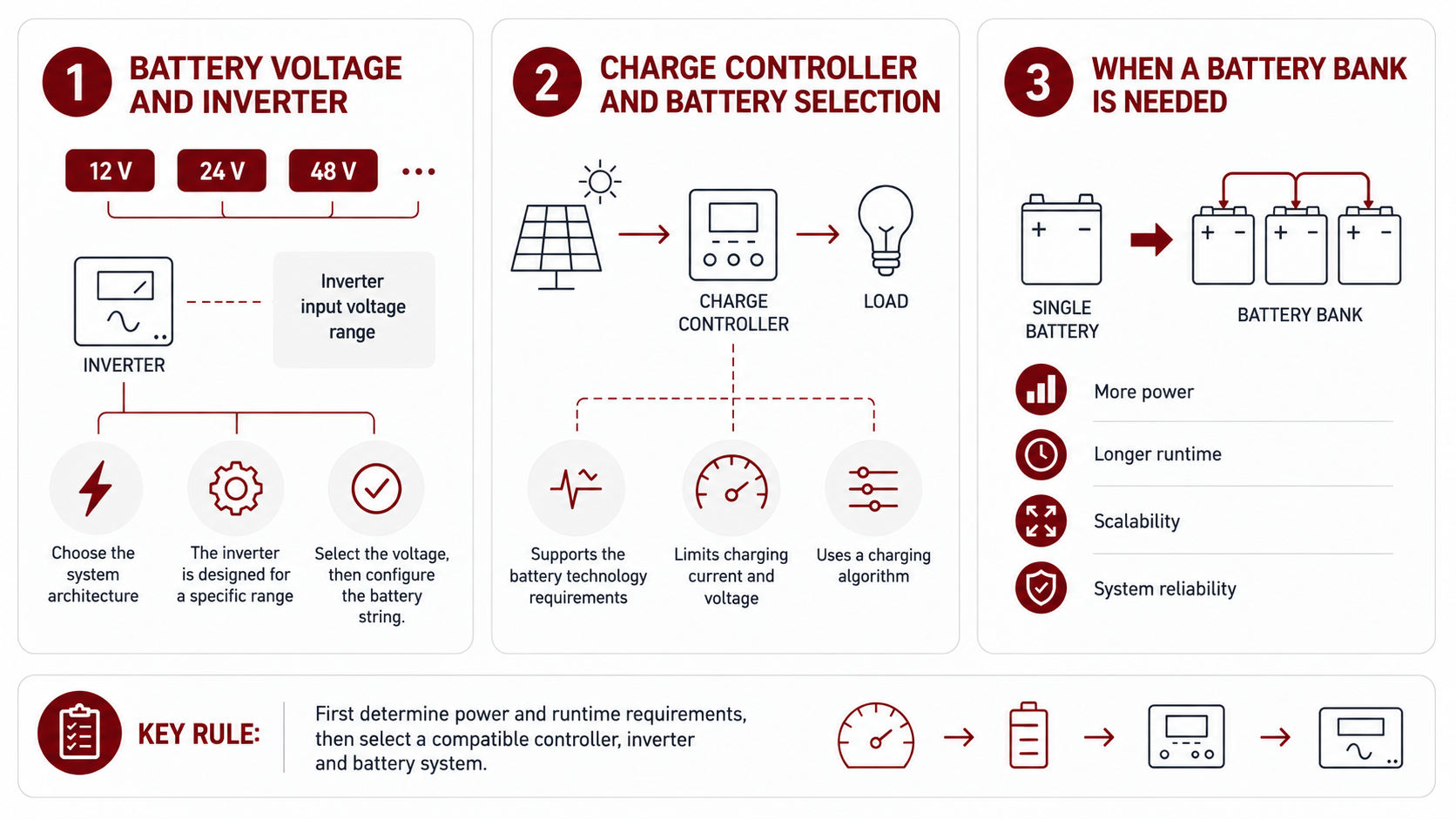
The parameters of the battery bank must correspond to the architecture of the entire installation. Voltage, charging current and battery technology are determined at the design stage.
How is the battery voltage connected to the inverter
The inverter is designed for a specific input voltage range. Therefore, 12, 24, 48 V or higher industrial voltage architecture is first selected, and then the battery circuit is formed.
How the charge controller affects the choice of battery
The controller regulates the charge from the photovoltaic modules and must support the parameters of the selected technology. When selecting, take into account the charging voltage, maximum current and the algorithm provided by the manufacturer.
When you need a battery bank instead of one battery
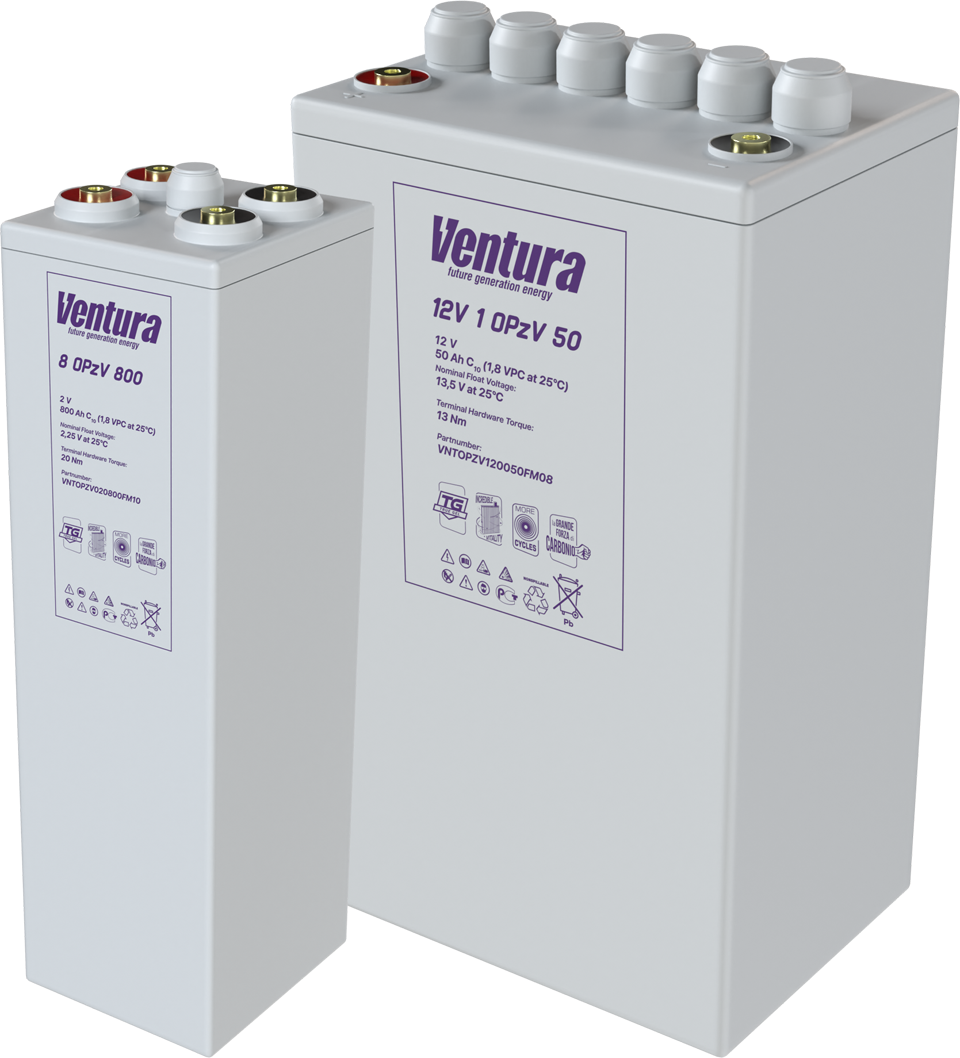
As power increases and the required backup duration increases, several monoblocks or high-capacity stationary elements are used. Such solutions are typical for telecommunications, energy and industrial energy storage systems.
Conclusion: which battery is better for solar panels
A suitable battery is determined by the parameters of the entire energy system. It is necessary to calculate consumption, select voltage, determine the required backup duration and compare the operating mode with the cyclic characteristics of a particular series.
Optimal battery selection algorithm
-
Determine daily energy consumption.
-
Set the required runtime.
-
Select battery system voltage.
-
Determine appropriate technology.
-
Calculate the capacity and check compatibility with the controller and inverter.
For industrial installations, 48 V and above systems, multiple parallel branches and long backup duration, an engineering calculation of the battery bank is recommended. Ventura specialists can select a series and configuration according to the technical specifications of the facility.
Frequently asked questions
Which battery is best for solar panels?
What batteries are needed for solar panels?
Which battery is suitable for 12V solar panel?
How many batteries are needed for solar panels?
How to calculate battery capacity?
Which is better - AGM or GEL?
Which voltage should I choose – 12, 24 or 48 V?
Can I use a starter battery?